Currently Empty: $0.00

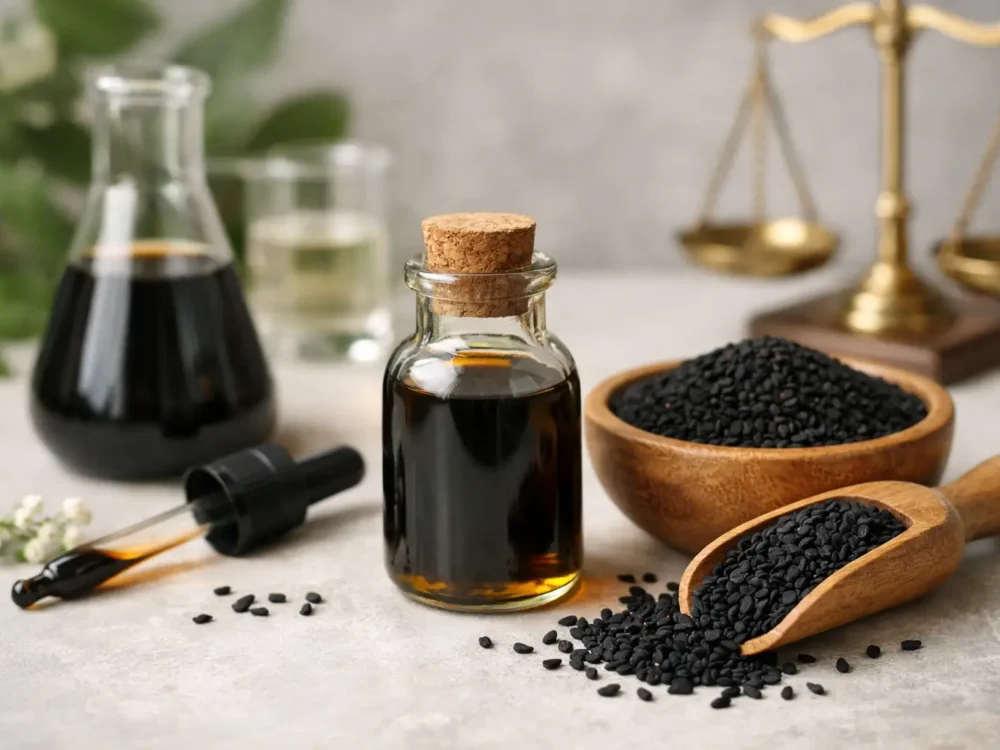
A bottle can say pure, cold-pressed, premium, and organic all at once – and still leave you guessing about what you are actually taking every day. That is why a real guide to black seed oil purity matters. If you are using black seed oil for routine wellness, recovery, or overall support, purity is not a nice extra. It is the difference between a product that fits your routine and one that only looks good on the label.
Black seed oil has gone mainstream fast, which is good for access but not always good for quality. More options usually mean more label noise, more vague claims, and more shortcuts hiding behind good packaging. If you want to buy once and buy well, you need to know what purity really means in practice.
What black seed oil purity actually means
Purity is not just about whether a product contains black seed oil. It is about how much of the bottle is genuinely black seed oil, how carefully it was produced, and whether the final oil still retains the compounds people are looking for in the first place.
A pure black seed oil should be free from unnecessary fillers, diluted carrier oils, artificial additives, and contamination. It should also be processed in a way that protects its naturally occurring active compounds, especially thymoquinone, often shortened to TQ. That matters because many shoppers are not simply buying oil for tradition alone. They are looking for a product with consistent quality they can use daily.
Purity also has a practical side. A cleaner oil usually has a more recognizable aroma, a stronger taste, and a more direct label. When a product avoids unnecessary extras, it is easier to understand what you are paying for.
Guide to black seed oil purity: what to check first
The fastest way to screen a product is to start with three things: the ingredient list, the extraction method, and whether the brand gives any real quality markers beyond marketing words.
If the ingredient list contains only black seed oil, that is usually a strong start. If you see blends with other oils, flavoring agents, preservatives, or vague “proprietary” additions, purity becomes harder to judge. A blend is not always bad, but it is no longer a pure black seed oil product.
Next, look at extraction. Cold-pressed is usually the preferred standard for consumers who want minimal processing. Heat can affect delicate compounds, so a carefully cold-pressed oil is often seen as the better option for preserving the natural profile of the seed. That said, cold-pressed on its own is not enough. It still needs to be handled, bottled, and stored properly.
Then look at what the brand proves. Terms like premium and high quality are easy to print. More useful signals include organic status, non-GMO positioning, cruelty-free claims where relevant, and testing transparency. The best products make the quality story easy to follow.
Why source matters more than most labels admit
Black seed oil starts with the seed, and poor raw material cannot be fixed later. Seed origin, farming practices, and harvest quality all shape the final oil.
Some consumers focus heavily on country of origin, and that can be helpful, but it should not be the only factor. A well-sourced seed lot from a careful producer matters more than a vague origin claim with no quality controls behind it. Good brands are clear about sourcing standards and consistent batches.
Organic positioning can also matter here. It is not a guarantee of perfect quality, but it can be a useful signal that the seeds were grown and processed with tighter input standards. For health-conscious shoppers who already prioritize clean-label essentials, this is often one of the simplest filters.
The role of thymoquinone in purity and potency
This is where many shoppers get stuck. Purity and potency are related, but they are not the same thing.
Purity tells you the oil is not watered down, mixed, or unnecessarily altered. Potency tells you something about the concentration of valuable compounds within that oil. In black seed oil, thymoquinone is one of the most talked-about markers. A higher TQ profile can be a sign that the oil is more concentrated in the compounds many buyers care about.
Still, more is not always automatically better for every person or every routine. Some users prefer a stronger oil. Others want a gentler format they can take consistently, such as softgels. What matters is that the brand is clear about the product profile instead of hiding behind broad wellness claims.
If a product highlights High TQ black seed oil, that should come with a quality story that makes sense – clean extraction, consistent sourcing, and a label that does not distract from the main ingredient.
Packaging can protect purity or slowly ruin it
Even a well-made oil can degrade if it is packaged poorly. Light, heat, and air are not your friends here.
Dark glass bottles are usually preferred because they help limit light exposure. Plastic packaging is not always a dealbreaker, but it generally does not inspire the same confidence for a sensitive oil. A secure cap and clear storage instructions also matter more than people think, especially in warm climates.
If you are in a humid, hot environment or tend to store supplements near a stove, window, or gym bag, purity can decline faster after opening. That is one reason convenience formats like softgels appeal to busy users. They reduce mess, portion inconsistency, and repeated air exposure while making daily use easier.
Red flags that should slow you down
A good guide to black seed oil purity should also tell you when to walk away. Some warning signs are obvious, while others are more subtle.
Be cautious with labels that shout purity but say very little else. If there is no clear extraction method, no explanation of sourcing, and no useful product details, the brand may be leaning too hard on buzzwords. The same goes for products with long ingredient lists that bury black seed oil among multiple additions.
Price can be another clue. Everyone likes a deal, but black seed oil is not the kind of product where ultra-cheap usually means exceptional value. If a bottle is priced far below the market without a believable reason, there may be compromises in seed quality, dilution, or processing.
Also watch for packaging that looks polished but avoids specifics. Strong branding is fine. Strong branding without substance is not.
How to read the label like a smarter buyer
You do not need a chemistry degree to shop well. You just need to know which details deserve your attention.
Start with the product name and ingredient panel. Confirm whether it is 100% black seed oil or a blended formula. Then check whether the label mentions cold-pressed extraction, organic standards, or TQ content. After that, look for storage guidance and any clear manufacturing or testing cues.
It also helps to check whether the product format fits your routine. Liquid oil may appeal to people who want a traditional approach and flexible serving size. Softgels can be better for consistency, portability, and taste avoidance. Purity is not only about the substance itself. It is also about how realistically you can stick with it.
For many shoppers, the best product is the one that balances quality markers with daily usability. A pristine bottle that sits untouched in the cabinet is less useful than a well-made format you will actually take.
Purity is not a single claim – it is a pattern
This is the biggest mindset shift. Do not treat purity as one badge on the front of the bottle. Treat it as a pattern across the entire product.
A trustworthy black seed oil usually shows alignment across sourcing, extraction, ingredient simplicity, packaging, and brand transparency. When those pieces line up, the product feels easier to trust. When one or two pieces are missing, that does not always mean the oil is poor quality, but it does mean you should ask harder questions.
That is especially true if you are shopping online, where you cannot smell or see the oil before buying. In e-commerce, clarity becomes part of the product. Brands that make quality easy to verify tend to earn repeat buyers for a reason.
If you are comparing options at https://sterlingnutrition.sg or elsewhere, look for a product that gives you a clean ingredient story, practical convenience, and quality markers that go beyond vague wellness language. That combination usually tells you more than flashy packaging ever will.
The smartest way to shop black seed oil is simple: do not chase the loudest claim. Choose the product that gives you the clearest proof, the cleanest formula, and a format you will use consistently enough to make it part of your routine.